
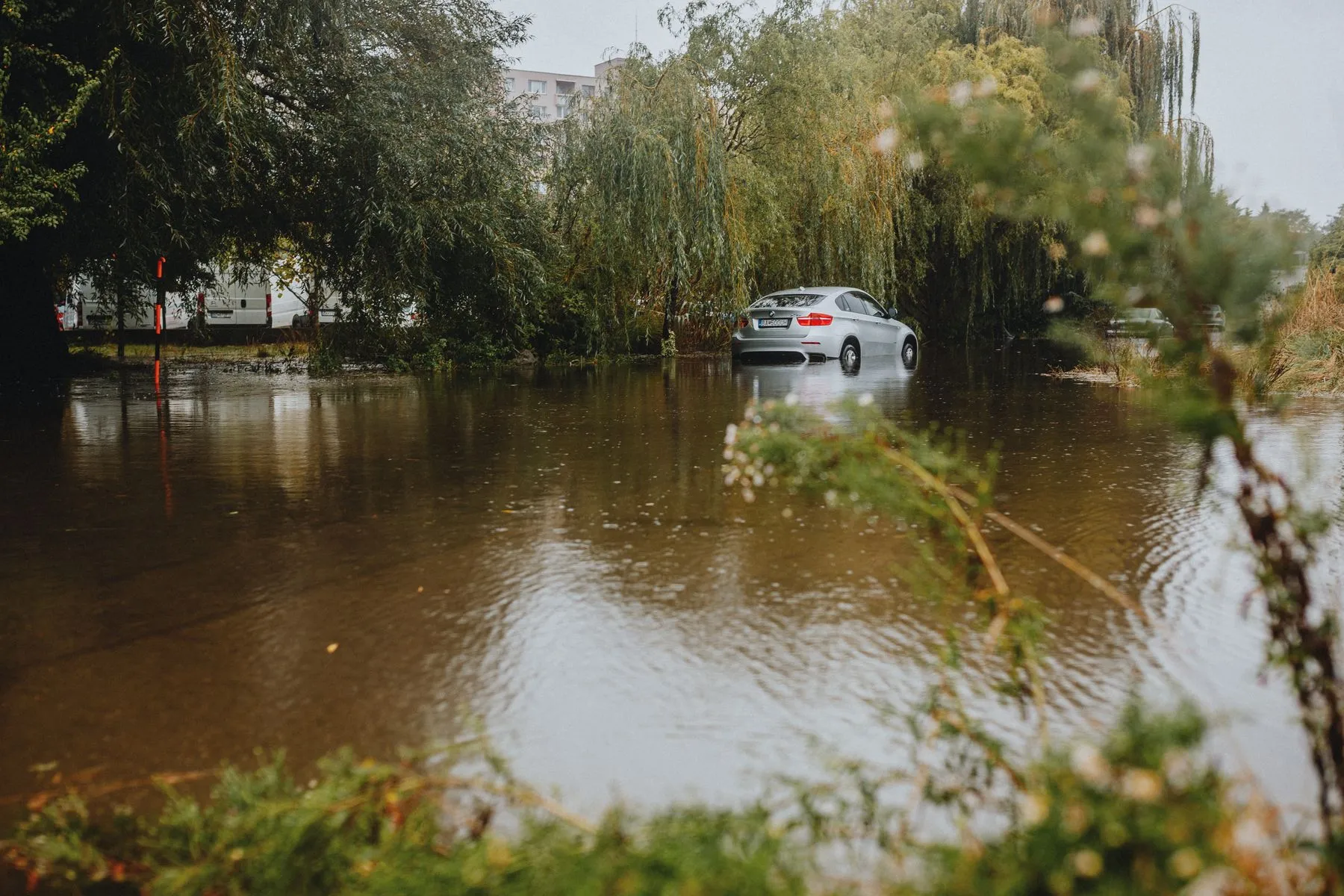
Chicago’s heavy summer storms can fill a viaduct or an underpass in minutes, and the South Side has plenty of both. A car that stalls in that water, or sits in a flooded basement garage overnight, is often a total loss for the electronics even when the body looks fine. Fire is more obvious: a short in the dash or an engine fire can leave a car that’s clearly finished.
We buy both, as they are.
Why damaged cars still sell
Flood and fire attack different parts of a car, and neither touches its weight in steel.
| Damage | What it usually ruins | What usually keeps value |
|---|---|---|
| Fresh flood, water below the seats | Carpet, some wiring, possibly the starter | Engine, transmission, body, wheels |
| Deep flood, water over the dash | Most electronics, the interior, often the engine | Body metal, wheels, catalytic converter |
| Engine-bay fire | Wiring, hoses, plastic parts up front | Rear body, frame, wheels |
| Full burn | Almost everything that isn’t metal | The metal itself |
We’ll ask how high the water reached or where the fire started, because that tells us which column your car sits in.
What to do first
- Don’t start a flooded engine. Cranking an engine with water in it can bend connecting rods.
- Call your insurer if you have comprehensive coverage. If they total it and take the car, the sale is theirs. If you keep it, it’s yours to sell.
- Photograph the car. It helps your insurance claim, and it helps us price the car on the call.
- Take out what you can save. Papers in the glove box, child seats and personal items.
The pickup
Wet carpets and soot don’t bother us. The driver loads the car with the winch, so it doesn’t need to roll or steer. You’re paid in cash, Zelle or Cash App when the car is on the truck.
If a burned or flooded car isn’t yours and has been left on your street, don’t arrange a tow yourself; our page on an abandoned car on your block explains the city’s process. If it is yours, get an offer for it.